When To Avoid Seoul?
The monsoon haze, the deep winter cold and the two holiday weeks when Seoul slows down, each judged against what a mountain-top view actually needs.
When To Avoid Seoul?
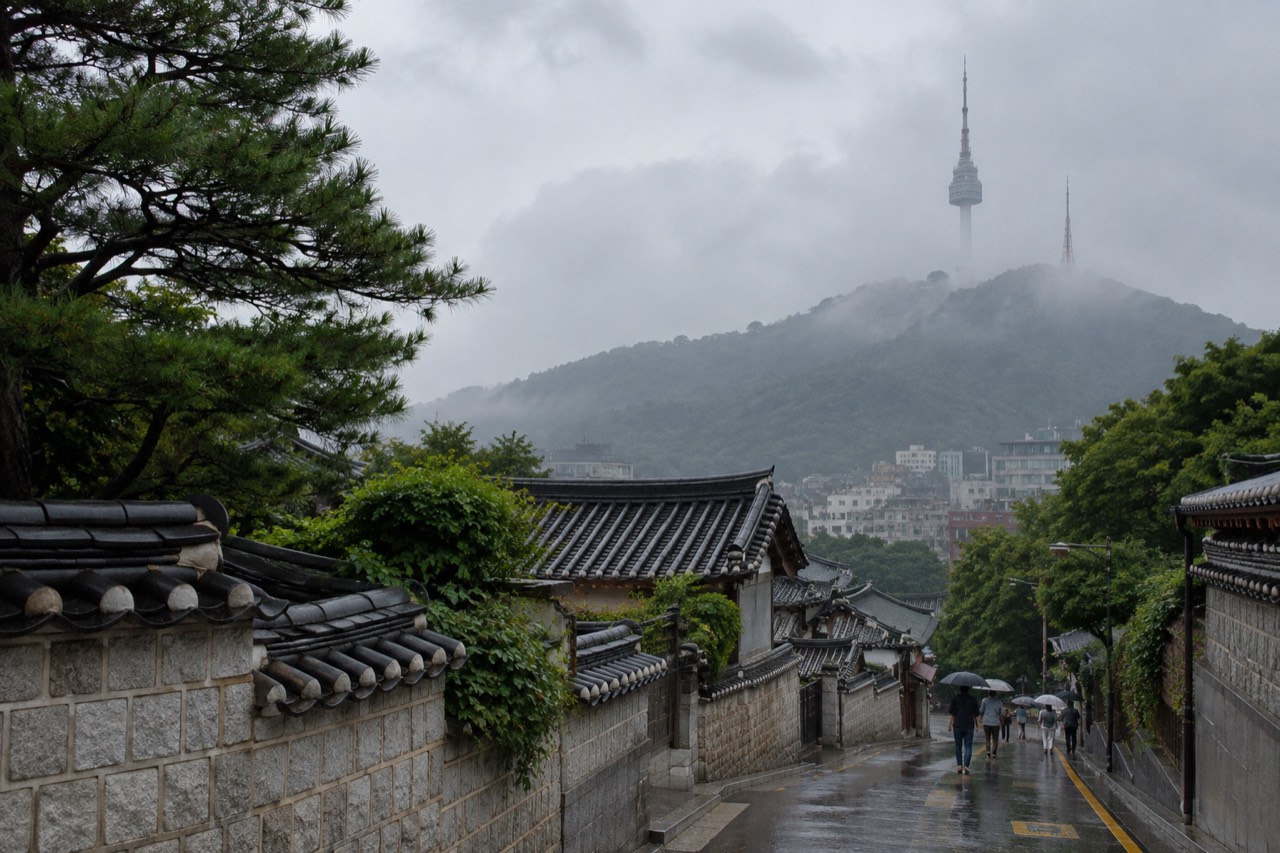
Avoid Seoul in late July and early August, when the monsoon's humid haze sits over the basin and flattens the long-distance view from Namsan, and avoid the two big Korean holiday weeks, Seollal and Chuseok, when family travel empties neighborhoods, fills trains and changes what is open. Deep winter is cold but honest: the air is often crisp and the city still runs.
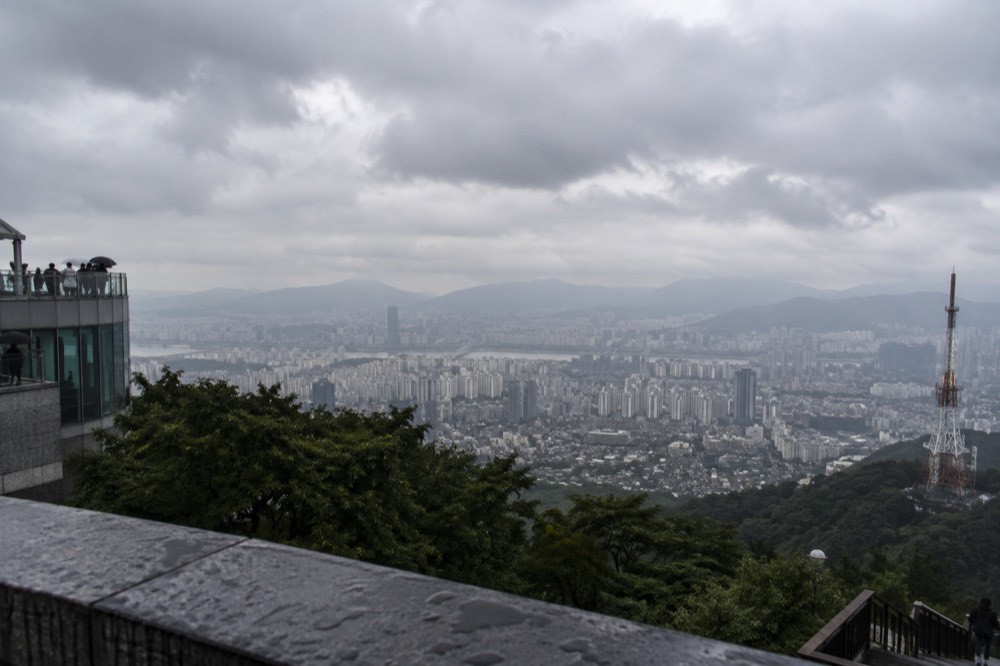
That is the short version. The longer answer depends on what you are coming for, because Seoul is a big city and "avoid" means different things for a palace crawl, a food weekend and a trip up a 236.7 m tower structure on top of a 270 m mountain. The observatory's whole promise is distance: the operator states that on a clear day you can see up to 50 km, out to Bukhansan in the north and Gwanaksan in the south. Anything that puts haze, rain or a shuttered city between you and that horizon attacks the one thing the ticket actually sells.
So this piece judges each candidate "avoid" window against a mountain-top view, which is a stricter test than most city guides apply. A drizzly Tuesday in October can still be a great eating day in Myeongdong and a poor day to pay for the deck. The two can be true at once, and separating them is the useful part.
There is also a practical layer to timing that has nothing to do with weather. Seoul's own transport policy shifted this year: the flat-rate 30-day Climate Card could be recharged only until 31 August 2026 and its replacement, the Climate Pass, is for Seoul residents, so the short-term one- to seven-day passes on the city's official climate card page are what a visitor should now look at. Getting around during a crowded holiday week is a different problem from getting around during a normal week, and the pass you choose is part of it.
If your dates are already fixed and one of the windows below lands on them, the honest position is that the tower still runs 365 days a year and the deck still opens at 10:00. You adjust expectations, not the itinerary.
Is the summer monsoon a reason to stay away?
Partly, yes. The Korean monsoon period brings long runs of humid, grey, drizzly weather that compress visibility, and haze is the specific enemy of a paid observation deck. But the season is not one solid wall of rain, the city does not close, and indoor Seoul, from galleries to underground shopping arcades, works fine in a downpour.
The monsoon is the strongest weather-based case for avoidance, and the reason is optical rather than logistical. A view platform in haze is still a view platform, but the 50 km clear-day horizon shrinks to a soft grey suggestion, and the Han River can disappear entirely. Visitors to the summit through the humid weeks report exactly that: the near view of the city grid stays rewarding, the far hills do not. The cable car company itself recommends the sunset-to-night window rather than daytime viewing, and night is when haze hurts least, because the city's own lights do the work instead of the horizon.
What the monsoon does not do is stop the mountain. The tower is open 365 days a year, and the operator's standing position is that hours can shift with weather and with Namsan vehicle-access rules, so a severe storm day can genuinely change operations. The Namsan Ormi inclined elevator, the free glass-walled lift up to the cable car station, is suspended in strong wind or heavy rain, and the cable car can stop or end early in bad weather. On a serious storm day the honest advice is not "go anyway", it is "the mountain's transport links are the fragile part".
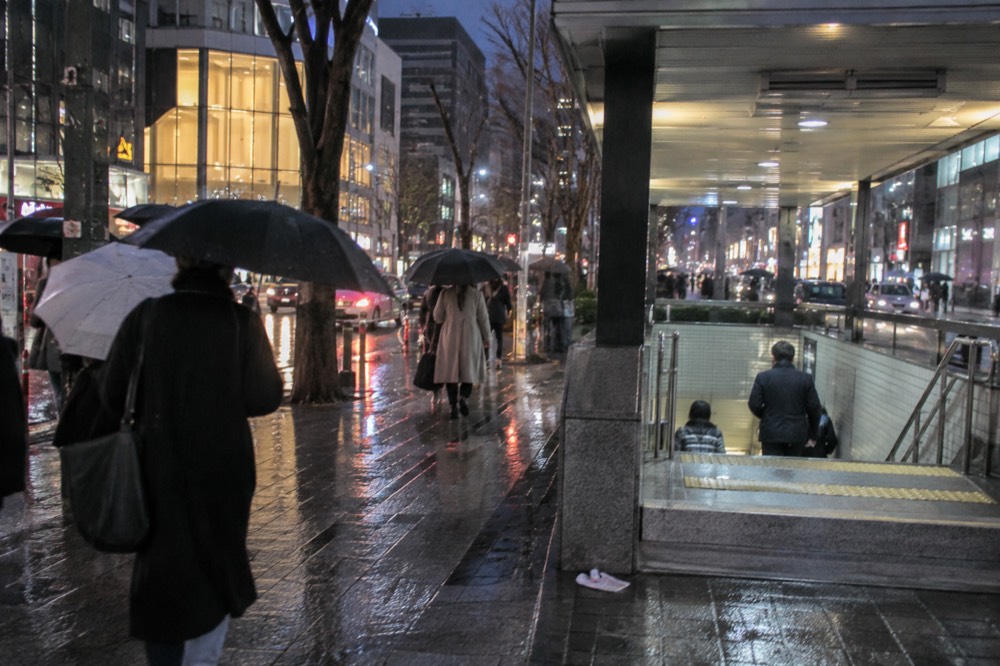
The practical read: if your trip falls in the monsoon weeks, keep the tower in your plan and move it to the evening slot. The observatory stays open until 22:30 on weekdays and 23:00 on weekends and public holidays, with last admission 30 minutes before closing, and the plaza, the love lock deck and the terraces around the base, all free, need no ticket and no visibility to be enjoyable. Rain in Myeongdong is a noodle-and-shopping problem, not a trip-ending one.
One more summer note. The city's own free guided night walk over the Namsan summit, which launched in September 2026 with departures at 18:00 and 20:00, runs mid-March through mid-November, so the monsoon period sits inside its season. A rainy-evening walk is a different experience from a clear one, but the option exists, it is free, and it is booked in advance through the city's walking-tour site.
Is Seoul's winter too cold for a tower visit?
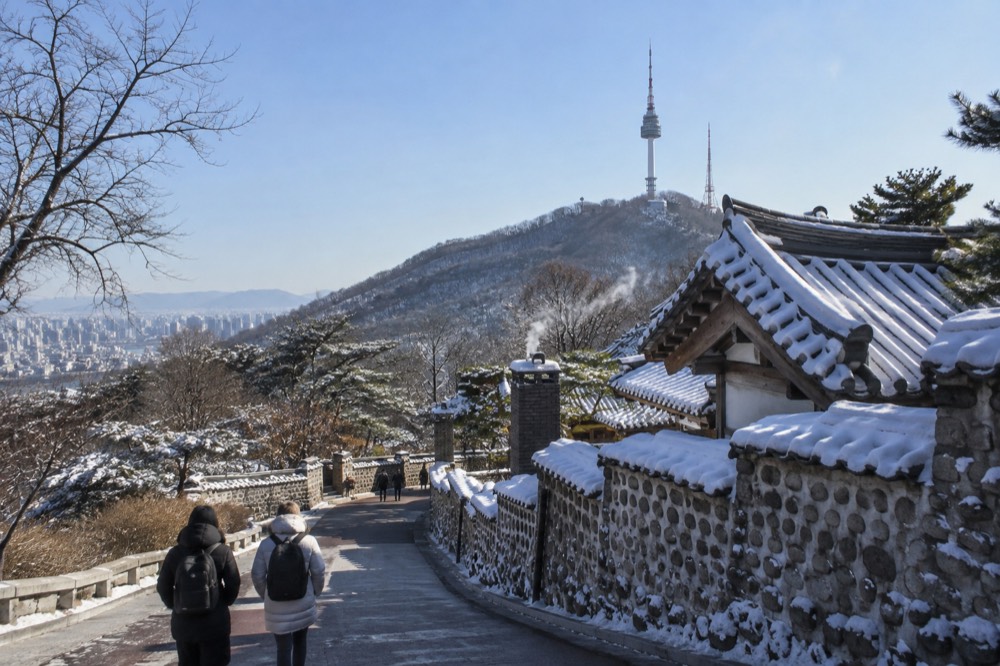
No, and this is the window most guides get wrong by lumping it in with genuine avoid-weeks. Seoul winters are genuinely cold, with dry, sharp air that is often better for long-distance visibility than a humid summer day. The trade is comfort: the summit plaza is exposed, and the wind at the top of a mountain does not negotiate.
Winter at Namsan is a comfort question, not a visibility question. Cold, dry winter air is frequently the crispest the Seoul basin gets, and visitors to the deck in the cold months often report the clearest far views of their stay, though no official source ranks months by visibility and none is claimed here. What you trade away is the pleasant standing-around time. The walk-up trails, the terraces and the Palgakjeong pavilion area are all free and all outdoors, and in January that means hats, layers and a hard limit on how long anyone lingers.
The indoor spine of the visit carries the season. The observation deck itself is inside and heated, the restaurants run their normal seatings, and the Seoul Tower Plaza floors below the tower hold a full retail lineup, from Starbucks and GS25 to bhc Chicken and Gong Cha, open to anyone without a ticket. A winter visit that moves between warm floors and short bursts of terrace air works well. A winter visit built around lingering on the summit plaza does not.
There is one honest caveat about December specifically. As of early September 2026, the Seoul Metropolitan Government's English site returns no results for a winter festival page for the coming season, so the city's winter programme dates for this December have not been published yet. Anyone planning a December trip around a specific festival should wait for the city to announce, rather than trust a blog listing dates. For the tower itself, nothing seasonal changes: the deck hours, the cable car's 10:00 to 23:00 run and the circular buses all continue through winter, with the Ormi elevator's standing Monday morning maintenance suspension the only fixed interruption.
If deep winter appeals, the companion piece on spending December in Seoul goes deeper on what the cold month actually offers, and the question of evening versus morning visits is covered in whether Namsan Tower is better at night or in the morning.
Which Korean holidays shut the city down?
The two to plan around are Seollal, the lunar new year, and Chuseok, the autumn harvest festival. Both move with the lunar calendar, both stretch into multi-day holiday weeks, and both send the whole country traveling at once. Shops and independent restaurants in tourist districts close or shorten hours, while the big attractions, including the tower, keep running.
These are the true "avoid" windows, and not because of weather. During Seollal and Chuseok weeks, Seoul partially empties as families travel to hometowns, then refills with domestic tourists. The pattern visitors report is consistent: palaces and headline attractions stay open and get busy, family-run restaurants and smaller shops in neighborhoods like Myeongdong close or run reduced hours, and intercity trains and express buses sell out far ahead. If your Seoul list is heavy on street food stalls and small independent shops, a holiday week genuinely undercuts it.
For the tower specifically, the effect is milder. The observatory opens 365 days a year, and public holidays push its hours later, to 23:00 rather than 22:30, with last admission 30 minutes before closing. The plaza tenants are chains and franchise operations, which are the businesses most likely to stay open on a national holiday. What changes is crowding: holidays are one of the busy windows at both the tower and the cable car, alongside weekends and evenings, exactly as visitors through 2026 describe.
| Holiday window | What happens to the city | What it means at Namsan |
|---|---|---|
| Seollal (lunar new year week) | Mass family travel, many small businesses closed or shortened, trains and buses full | Tower open, holiday hours apply, holiday crowds at the deck and cable car |
| Chuseok (autumn harvest week) | Same travel pattern, plus traditional events at palaces and folk villages | Tower open, busy, smaller Myeongdong shops around the base may close |
| Ordinary weekends | No closures, full retail and food scene | The standing busy window at the tower and cable car |
| Weekdays outside holidays | Business-as-usual city | The quietest tower visits, especially early or late in the day |
No dates are given for these holiday weeks here, because the lunar calendar moves them each year and no official source for the coming seasons' clusters was verifiable. Check the current year's Korean public holiday calendar before booking, and if your dates collide, book intercity transport the day bookings open rather than hoping.
There is a counterweight worth knowing about. From September 2026 the city runs a free guided night walk over the summit itself, departing at 18:00 and 20:00 daily through mid-November, ending at Palgakjeong with a deliberate link down toward Namdaemun Market for eating afterwards. The city's own announcement of the course is published on its media hub. It is the kind of scheduled, city-run evening activity that softens a holiday week, and it costs nothing.
Does cherry blossom season count as a time to avoid?
Only if you hate crowds, and even then it is a trade rather than a verdict. Blossom season puts heavy foot traffic on Namsan's most famous path, the route from Namsan Public Library up to the tower, and the city itself promotes it as a signature spot. The blossom is real, the crowds are real, and the two arrive together.
The honest framing is that cherry blossom season is the opposite of an avoid-week on paper and a congestion problem in practice. Seoul's own city government describes Namsan as a famous blossom spot and names the library-to-tower path specifically. The Korea Meteorological Administration's long-term average puts Seoul's flowering at 8 April and full bloom at 10 April, measured at the standard King cherry tree at the Seoul Weather Observatory, and that is a Seoul-wide average, not a Namsan-specific date, which is exactly how it should be read. No Namsan-only bloom date exists from any official source.
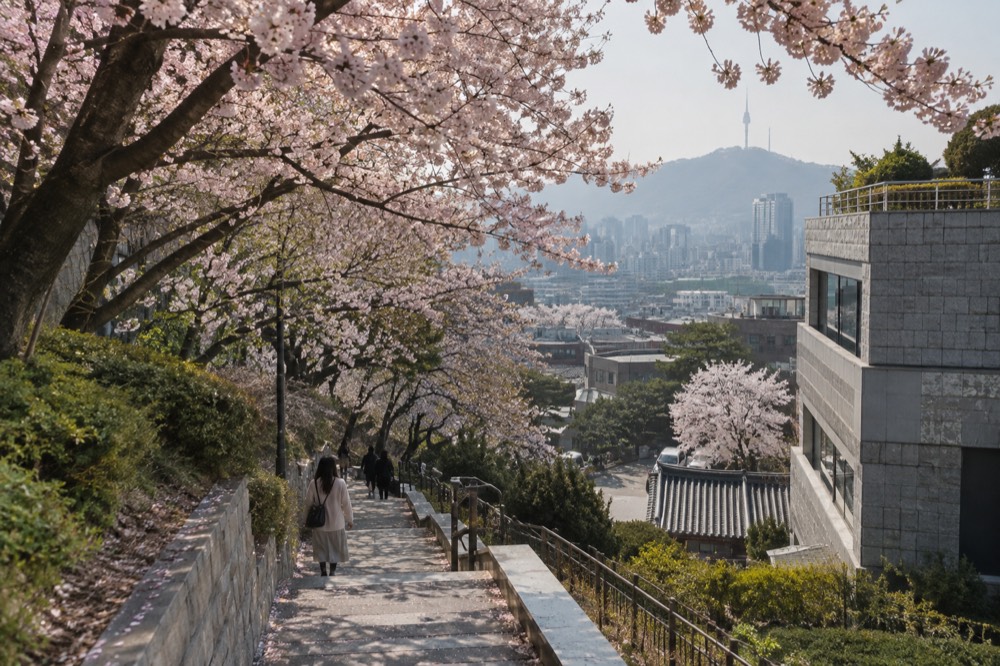
What the blossom weeks mean for a tower visit is crowding on the approach. The walking trails up the mountain, all free, fill with blossom walkers, and the summit plaza gets the overflow. The observatory deck itself keeps selling tickets as always, and the fast-track option exists for visitors who would rather not stand at the ticket counter, with the exact truth being that it skips the counter and nothing else: no separate lane or priority entry is promised, and one buyer reported no visible fast-track lane at all. Riders still queue for the cable car whatever ticket they hold.
The verdict: if blossom matters to you, this is a go-week, not an avoid-week, and you should simply go early in the day, since mornings are the quieter window the cable car company itself recommends. If blossom does nothing for you and you were choosing dates freely, pick a weekday outside the blossom window and you get the same mountain with a fraction of the company. The operator's own published hours page is the reference for the deck's opening and closing times whenever you go.
When is the calmest window for the tower?
Weekdays outside the two holiday weeks, outside the blossom peak, and in the shoulder months rather than the monsoon's humid heart. Within any day, mornings are the quiet end, per the cable car company's own advice, and weekday evenings are quieter than weekend evenings. Nothing official quantifies waits in minutes, so plan around the pattern, not a number.
Pulling the threads together, the avoid-list and its inverse look like this. The monsoon's humid weeks flatten the view, the two lunar holiday weeks disrupt the city's small-business layer and add domestic crowds, and the blossom peak crowds the mountain's most popular path. Everything else is negotiable. Winter is cold but often clear. Ordinary weekends are busy but fully open. A weekday in a shoulder month, with an evening slot for the lights, is about as good as the calendar gets for a mountain-top view, and no date-stamped promise beyond that is honest.
The free-versus-paid structure of Namsan also softens every bad-timing scenario, and this is the point worth carrying. The park, the summit plaza, the terraces, the love lock deck, the Bongsudae beacon mound, the Seoul City Wall path and the Ormi elevator all cost nothing. Only the deck inside the tower, the cable car if you ride it, the circular bus if you take it, parking, food and shopping cost money. A hazy day can therefore be a free-plaza-and-coffee day rather than a wasted ticket, which is the single most useful thing to know about timing a visit. Namsan Tower Seoul exists as a site largely to keep that boundary clear.
For the deck itself, the standard observatory ticket is the from-price option at US$15.25, rated 4.6 across 34,365 reviews, and it can be checked against the live listing at any point in planning.
One last timing note for anyone whose dates are locked into a busy window: the fast-track option at US$40.85 is the pricier route past the ticket counter, and the observatory-plus-cable-car package at US$28.05 bundles the ride up, though it requires collecting a physical ticket at a partner shop in Myeongdong before you ride, and collection closes at 18:00. Whether any of those is worth it on a crowded day is a personal call; what is certain is that none of them changes the weather.
Whichever option fits, the timing logic above is what should drive the calendar choice, not the ticket choice. Pick the quiet week first, then decide how you want to go up, and the deck, the plaza and the lights all fall into place around it.
Common questions about avoiding Seoul
When To Avoid Seoul?
Avoid the monsoon's humid weeks in late July and early August if a long-distance view from Namsan is the priority, and avoid the Seollal and Chuseok holiday weeks if your trip depends on small shops and independent restaurants, which close or shorten hours. Deep winter is cold but often clear, and the tower itself runs 365 days a year.
Is the summer monsoon a bad time to visit N Seoul Tower?
It is the worst season for visibility, because humid haze compresses the 50 km clear-day horizon the deck sells. It is not a closure: the tower opens every day, and evening visits suffer least since the city's own lights carry the view. The free plaza and terraces around the base need no ticket and work in any weather.
Is winter in Seoul too cold for the observatory?
No. Winter is a comfort trade rather than a visibility problem, and cold dry air is often the crispest the basin gets. The deck is indoors and heated, the plaza floors hold shops and cafes open without a ticket, and the exposed summit plaza simply demands proper layers.
Do shops in Seoul close during Seollal and Chuseok?
Many smaller and family-run businesses close or shorten hours during both holiday weeks, while chains, plaza tenants and headline attractions generally stay open. The tower keeps running on its public-holiday hours, closing at 23:00, but expect holiday crowds at the deck and the cable car.
Is cherry blossom season a time to avoid Namsan?
Only if crowds bother you more than blossom appeals. The path from Namsan Public Library up to the tower is the city's own famous blossom route and it fills up. Go early in the morning if you go, since mornings are the quieter window the cable car company itself recommends.
What is the quietest time to visit N Seoul Tower?
A weekday outside the holiday weeks and the blossom peak, in the morning or at the quiet end of the evening. No official source states waits in minutes, but the pattern from the operators and from visitor reports is consistent: weekends, holidays and evenings are busy, weekdays and the day's edges are not.