What Time Does The Namsan Tower Light Up?
No official source publishes a switch-on time for N Seoul Tower's lighting. Here is what is actually verified: when it glows, what the lights signal, and the only fixed clock facts on the mountain.
What Time Does The Namsan Tower Light Up?
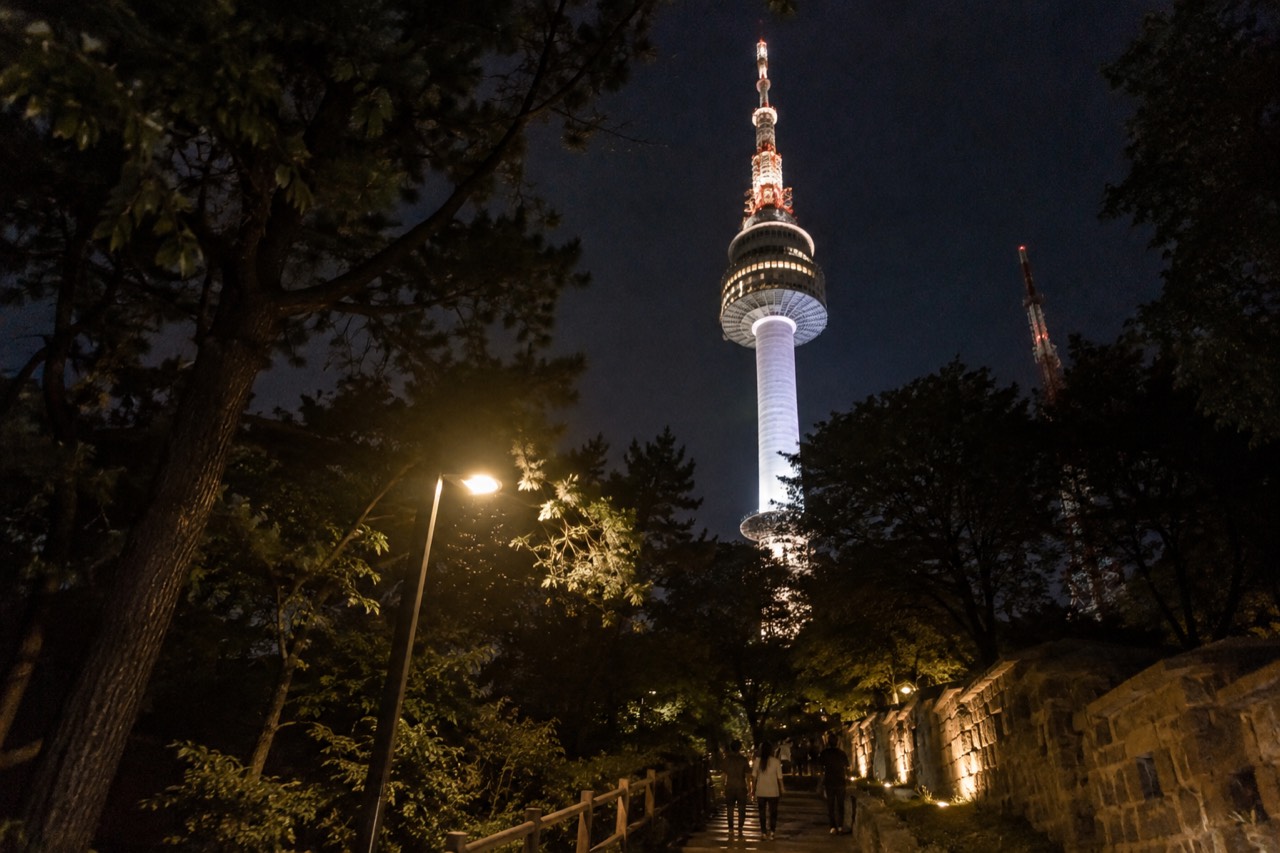
No official source publishes a switch-on time. No tower operator, owner or Seoul city page publishes a lighting schedule for the tower for when the exterior lighting comes on or goes off. The tower is lit after dark, and no official source publishes an exact switch-on time. The switch-on times circulating online come from third-party guides that repeat one another, not from the tower.
That answer will disappoint anyone hoping for a number to plan an evening around, but it is the truthful one, and it matters for how you plan. The tower's lighting is not run like a fountain show with a printed start time. It comes on with darkness and stays on through the evening, which in practice means that anyone on the summit or looking up from the city centre after nightfall will see it lit. Visitors planning a specific photograph should think in terms of darkness falling, not a clock figure somebody invented.
What does exist, verified and published, is a set of fixed clock facts around the lights. The observatory inside the tower runs 10:00 to 22:30 on weekdays and 10:00 to 23:00 on weekends and public holidays, with last admission 30 minutes before closing in each case. The cable car runs 10:00 to 23:00 every day of the year, again with the last ticket sold 30 minutes before closing. Those are the numbers that actually govern an evening visit, and they are the ones worth building a plan on.
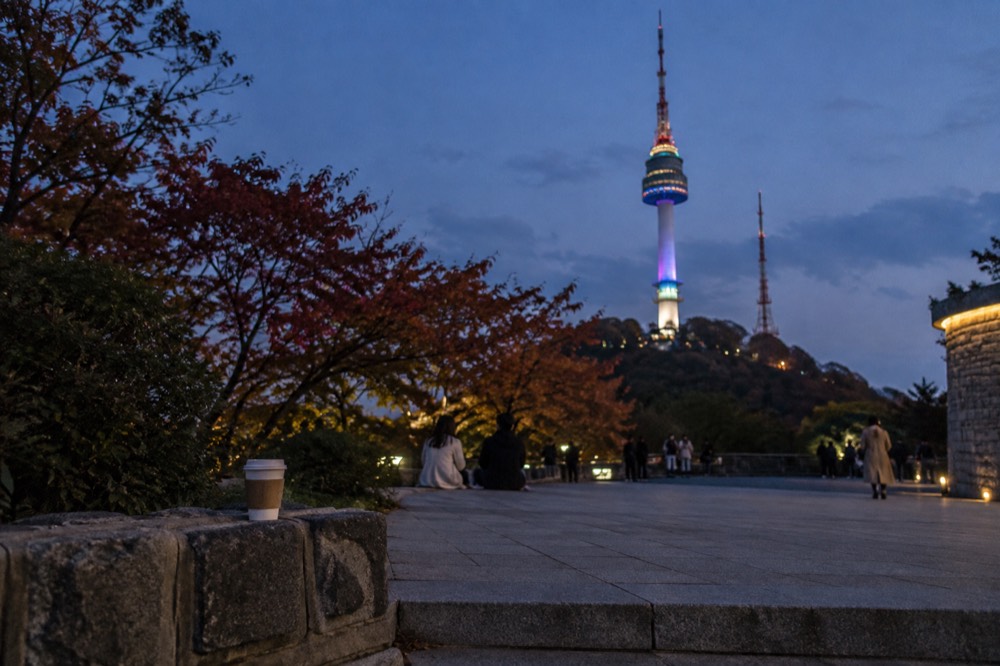
The reason this question gets asked so often, and answered so badly, is structural. The tower's lighting is managed by the tower's owner, while the observatory inside it is run by a separate operator, and the mountain underneath is a Seoul city park. Three organisations, three websites, and none of them publishes a lighting schedule. Into that vacuum step travel blogs, which copy each other's switch-on times until the numbers look authoritative. They are not. When a source cannot be traced back to the operator, the city or the tower owner, treat it as decoration.
If your evening plan depends on being inside the deck rather than standing on the free summit plaza below, the ticket is what matters. The options below cover the observatory itself, with or without the ride up.
Why there is no published switch-on time
The tower owner's own lighting page describes the illumination but publishes no schedule, and the operator's site does not either. Both were checked directly, along with Seoul city pages, and none states when the lights come on or go off. The only fixed clock facts anyone official publishes are the observatory's opening hours and its last-admission rule.
The tower owner's lighting page, at seoultower.co.kr's tower light section, is the closest thing to an authority on the subject, and it talks about the lighting's character rather than its timetable. The operator's own introduction pages, nseoultower.co.kr, likewise describe the tower and its illumination without a switch-on hour. That silence is consistent across every primary source, which is why this site reports it plainly rather than filling the gap.
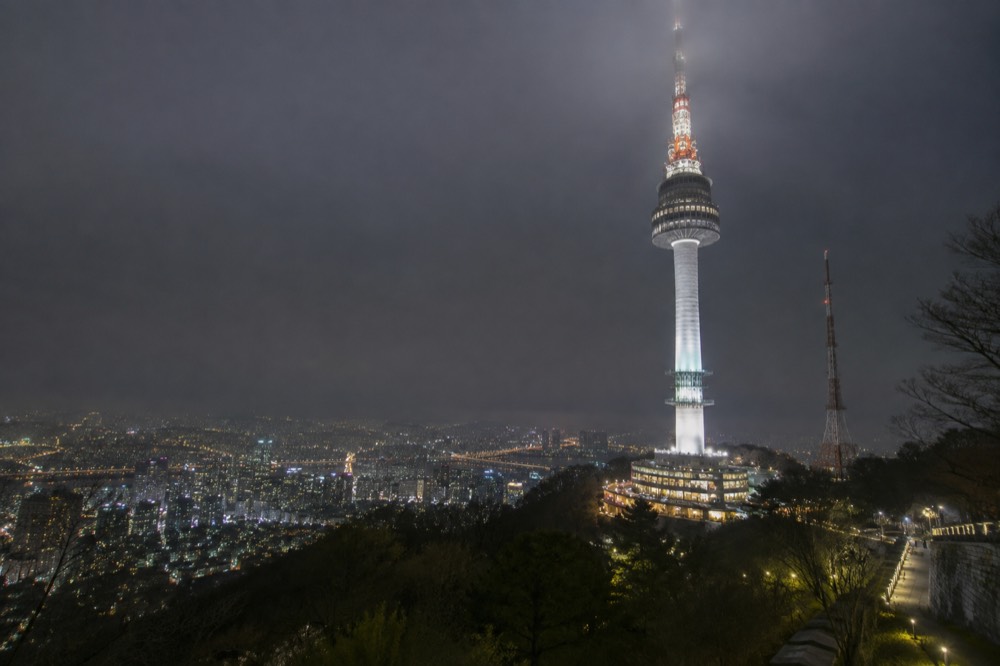
This matters because the internet is full of confident answers. Search the question and you will find pages giving a precise evening hour for the light-up, sometimes with seasonal variations attached. Trace any of them back and you find no operator page, no city page, no tower owner page behind the claim, just other guides quoting each other. A reader who plans to arrive at that exact minute may be early, may be late, and will have no way of knowing which, because the number was never real in the first place.
The practical translation is simple. Darkness, not a timetable, switches the tower on. In winter that means the lights are already glowing well before the observatory's last admission; in summer you may stand on the summit in daylight at 19:00 and watch the city lamps come on while you wait. Either way, the deck's own hours are the constraint that can actually end your evening, and the free plaza outside never closes on a clock that gates you.
If you want the lit-city view from inside the glass rather than from the terraces, this is the decision point.
What the tower's lighting actually signals
The tower body's lighting has signalled Seoul's fine-dust level since January 2011, according to the operator's own history timeline, and the tower owner confirms the lighting indicates the city's air-pollution level. The specific colour code and its thresholds are not published in any verified form, so the honest statement is that the colour carries meaning the operators have not spelled out.
That is a genuinely interesting fact hiding inside this question. The tower does not just light up decoratively at night. Since January 2011, per the operator's own recorded timeline, the colour of the tower body's illumination has been used to indicate Seoul's air-pollution level, and the tower owner's site states the same in plain terms. What no verified source publishes is the key: which colour means what, and at which pollutant thresholds the colour changes. Any page that claims to decode it is guessing.
The lighting also serves occasions beyond air quality. The tower runs one-off commemorative and diplomatic light-ups requested by outside bodies, and one documented example is a commemorative lighting staged for the sixtieth anniversary of Korean-Japanese diplomatic relations, arranged through the Korean foreign ministry's network. So on a given evening the tower's colour may reflect air quality, a commemoration, or a special request, and a visitor standing below has no official way to tell which. That ambiguity is itself the honest answer to a question many people actually mean when they ask about the lights.
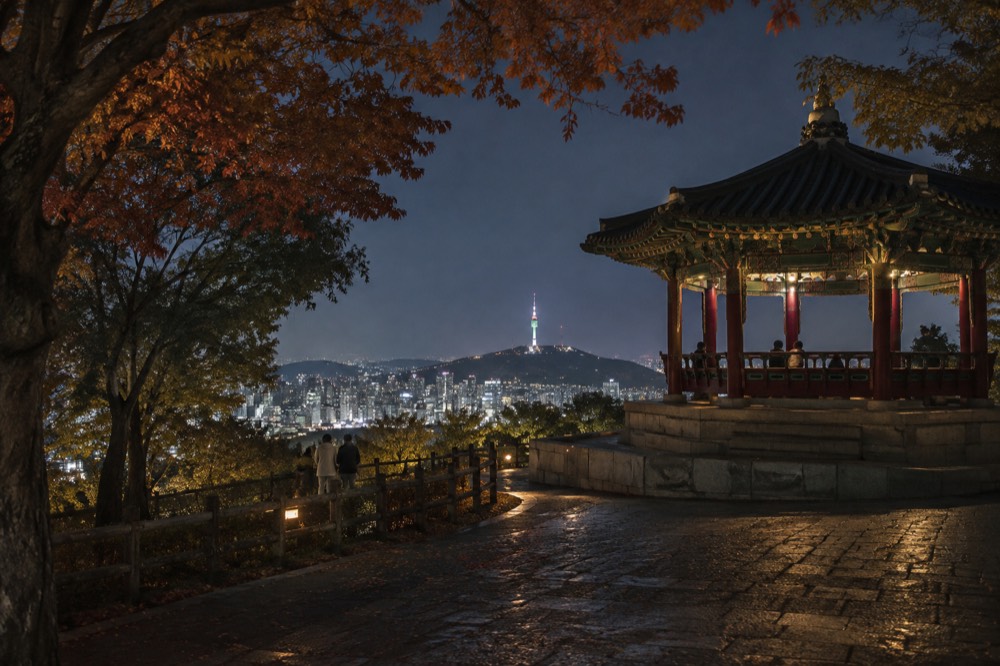
For visitors, the practical takeaway is that the lights are a bonus layered on top of the view, not a scheduled show. The deck itself is what you buy a ticket for, and the deck's value after dark is the lit city spread below: on a clear day the operator states visibility of up to 50 km, naming landmarks in every direction from Bukhansan in the north to Gwanaksan in the south. At night that panorama becomes a field of lamps, and it is available from the free terraces around the base as well as from inside.
The observatory ticket is the from-price option for the deck itself, rated 4.6 across 34,365 reviews and starting from US$15.25 per adult. It buys the observation levels inside the tower, nothing more and nothing less, and the lit summit around the building remains free whether you hold one or not.
The only fixed clock facts on the mountain
The verified clock facts are these: the observatory runs 10:00 to 22:30 on weekdays and 10:00 to 23:00 on weekends and public holidays, with last admission 30 minutes before closing. The tower is open 365 days a year. The cable car runs 10:00 to 23:00 daily, last ticket 30 minutes before closing. No lighting schedule exists alongside them.
These numbers come straight from the operator's own hours pages, and the Seoul Metropolitan Government has independently repeated the observatory hours in its own English feature on Namsan. They are the skeleton of any evening plan, because they are the only published times that can end your visit. Arrive after last admission and the deck is closed to you, lights or no lights. The rest of the planning pages sit on Namsan Tower Seoul.
| What | Hours | Last entry or ticket |
|---|---|---|
| Observatory, weekdays | 10:00 to 22:30 | Admission until 22:00 |
| Observatory, weekends and public holidays | 10:00 to 23:00 | Admission until 22:30 |
| Namsan Cable Car | 10:00 to 23:00, every day | Last ticket 22:30 |
| Namsan Ormi inclined elevator | 09:00 to 23:00 | Suspended Mondays 09:00 to 14:00 |
| Circular buses 01A and 01B | 06:30 to 23:00 | 01A every 9 minutes, 01B every 14 |
Two footnotes belong with that table. The Ormi, the free glass-walled inclined elevator between Namsan Tunnel 3 and the cable car station, also pauses in strong wind or heavy rain, and the operator states generally that tower hours can shift with weather and with Namsan vehicle-access restrictions. The circular buses board at Chungmuro Station or Dongguk University Station and cost KRW 1,500 with a transport card. None of these is a lighting time, but together they define the window in which an evening on the mountain physically works.
It is also worth knowing what the hours do not gate. The summit plaza, the terraces around the tower base, the Palgakjeong pavilion area and the love lock deck are all free and open ground. A visitor who arrives after the deck's last admission has not missed the mountain, only the indoor view. Many people, in fact, come for the lit tower itself and never buy anything, which is a perfectly complete visit. Our guide to N Seoul Tower at night covers that free evening in detail.
The new free way to see the lights: Seoul's summit night walk
From September 2026, Seoul's free guided walking-tour programme runs a Namsan City Wall night course over the summit itself, with two fixed evening departures at 18:00 and 20:00 every day. The route passes N Seoul Tower and the love lock deck by name and finishes at Palgakjeong, led by a licensed city culture-and-tourism guide.
This is the freshest fact on the whole mountain, and it changes the answer to this article's question in a practical way. For the first time there is a scheduled, official, guided evening presence on the summit, run by the city rather than the tower. The course starts at the Namsan Sky Forest Trail entrance near the Sowol poetry monument garden, passes the Zelkova Observatory, the Sunset Observatory and the Wellness Garden, then goes past N Seoul Tower and the love lock deck, and ends at Palgakjeong, with the city deliberately linking the finish to a descent toward Namdaemun Market so walkers can eat afterwards. The details are published on Seoul's own media hub.
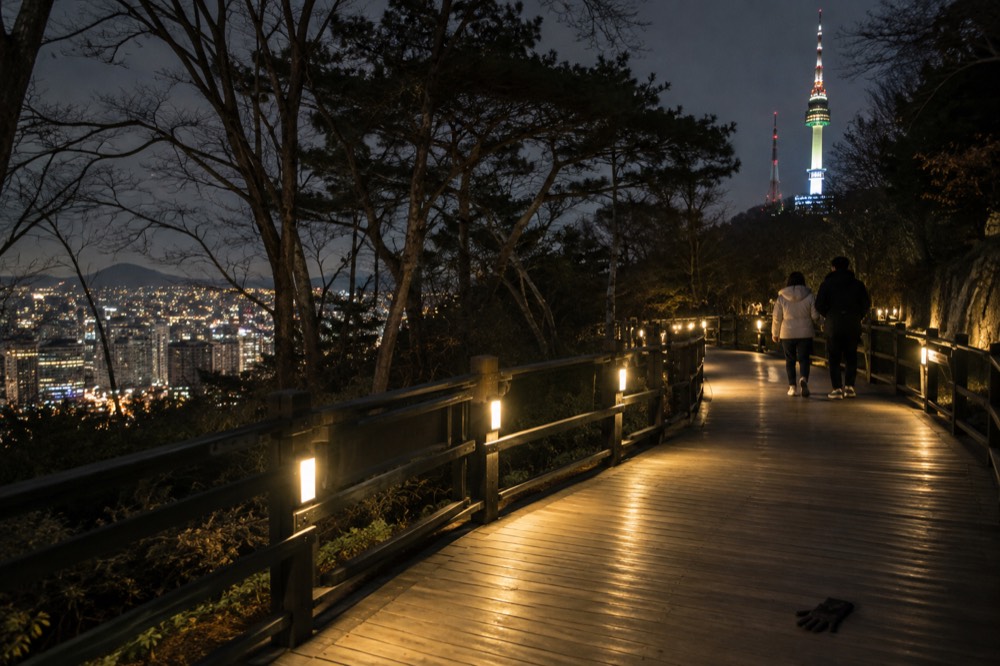
The night-walk season was extended at the same time, from a summer-only window to mid-March through mid-November, and the later daily departure was pushed to the 20:00 slot. The programme is free and booked in advance through the city's own walking-tour site rather than on the day. For anyone asking when the tower lights up, this is the closest thing to a scheduled evening experience that officially exists: a guided walk that reaches the tower after dark, on a route the city itself designed around the summit's night views.
The walk also settles a quieter question. Because the city routes its official course past the love lock deck by name, the locks are confirmed active and part of what Seoul itself promotes on Namsan. That is worth knowing alongside the lights, since the two sit a few steps apart on the summit. Our piece on whether morning or night is better at Namsan Tower weighs the two windows against each other.
Planning an evening around lights nobody schedules
Plan around darkness and the deck's closing time, not a switch-on hour. Weekday evenings give you until 22:30 inside the observatory, weekend evenings until 23:00, with last admission 30 minutes earlier in both cases. Visitors report that weekends, holidays and evenings are the busy windows, and weekday visits the quiet ones, with no official source stating any wait in clock terms.
The crowding picture is qualitative, and this site keeps it that way because that is all any source supports. The cable car company's own advice says mornings are quieter than afternoons and that boarding waits can get long at weekends, and visitor reports through mid-2026 agree, describing weekends, public holidays and evenings as the busy windows at both the tower and the cable car. Nothing anywhere states a wait in minutes. What follows for a lighting-focused visit is that a weekday evening, or the late end of any day, is the calmer way to see the lit tower, and the summit's new scheduled night-walk groups add a known evening presence that did not exist a year ago.
Transport shapes the evening more than most guides admit. Private cars have been barred from Namsan since 1 May 2005 for ecological protection, so the ways up are the cable car, the circular buses, the free Ormi elevator from the Namsan Tunnel 3 side, or your own legs on the official trails. The cable car company also runs a free shuttle between Myeongdong Station and the cable car platform, first departure 12:00 and last 20:30. Our Namsan walk-up guide covers the trail options, including the four official routes with the tower owner's own times.
One practical note for anyone weighing the ticket options: the fast-track observatory option, at US$40.85, is a ticket variant on the operator's listing rather than a guarantee of a shorter physical wait, and a buyer of it reported no visible fast-track lane at the deck. The plain observatory ticket and the observatory-plus-cable-car package, at US$28.05, remain the straightforward choices, with the combo requiring collection of a physical ticket at a partner shop in Myeongdong before you ride, and collection closing at 18:00. That 18:00 cut-off is a real clock fact that shapes an evening plan more than any lighting rumour.
However you time it, the lit tower is the one part of the evening that asks nothing of you. It will be glowing when darkness falls, whatever hour that happens to be, and the free ground around it stays open to anyone who walks up. The paid deck above adds glass, height and the rotating restaurant's slow turn, but the light itself belongs to everyone in the city, which is rather the point of a beacon.
If the deck is part of your plan, these are the options worth comparing.
Common questions about the Namsan Tower lighting
What Time Does The Namsan Tower Light Up?
No official source publishes a switch-on time. The tower operator, the tower owner and Seoul city have all been checked directly, and none publishes a schedule for the exterior lighting. The tower is lit after dark, and the switch-on times found in third-party guides all trace back to each other rather than to any authority.
Does the tower lighting mean something?
Yes. Since January 2011 the tower body's lighting has signalled Seoul's fine-dust level, according to the operator's own history timeline, and the tower owner confirms the lighting indicates the city's air-pollution level. The specific colour code and its thresholds are not published in any verified form, and the tower also runs one-off commemorative light-ups for outside bodies.
What time does the observatory close?
The observatory runs 10:00 to 22:30 on weekdays and 10:00 to 23:00 on weekends and public holidays, with last admission 30 minutes before closing in each case. The tower is open 365 days a year, and the operator notes hours can change with weather and Namsan vehicle-access restrictions.
Can you see the lit tower for free?
Yes. Namsan Park, the summit plaza, the terraces around the tower base, the Palgakjeong area and the love lock deck are all free and need no ticket. Only the observation deck inside the tower is ticketed. Seoul also runs a free guided night walk over the summit from September 2026, with departures at 18:00 and 20:00.
Is the cable car running late enough for the lights?
The cable car runs 10:00 to 23:00 every day of the year, with the last ticket sold 30 minutes before closing, so yes for most of the evening. Its free Myeongdong shuttle stops earlier, with the last departure at 20:30, so plan the return leg accordingly.
When is the quietest time to see the tower lit?
Visitors consistently report that weekends, public holidays and evenings are the busy windows at both the tower and the cable car, and that weekday visits and the early or late ends of the day are quieter. No official source states any wait in clock terms, so treat this as a general pattern rather than a promise.