Is Namsan Park Worth Visiting?
A clear-eyed look at Namsan Park as a destination in its own right: what is free, what costs money, what to do at the top, and whether the mountain deserves more than a corridor walk to the ticket desk.
Is Namsan Park Worth Visiting?
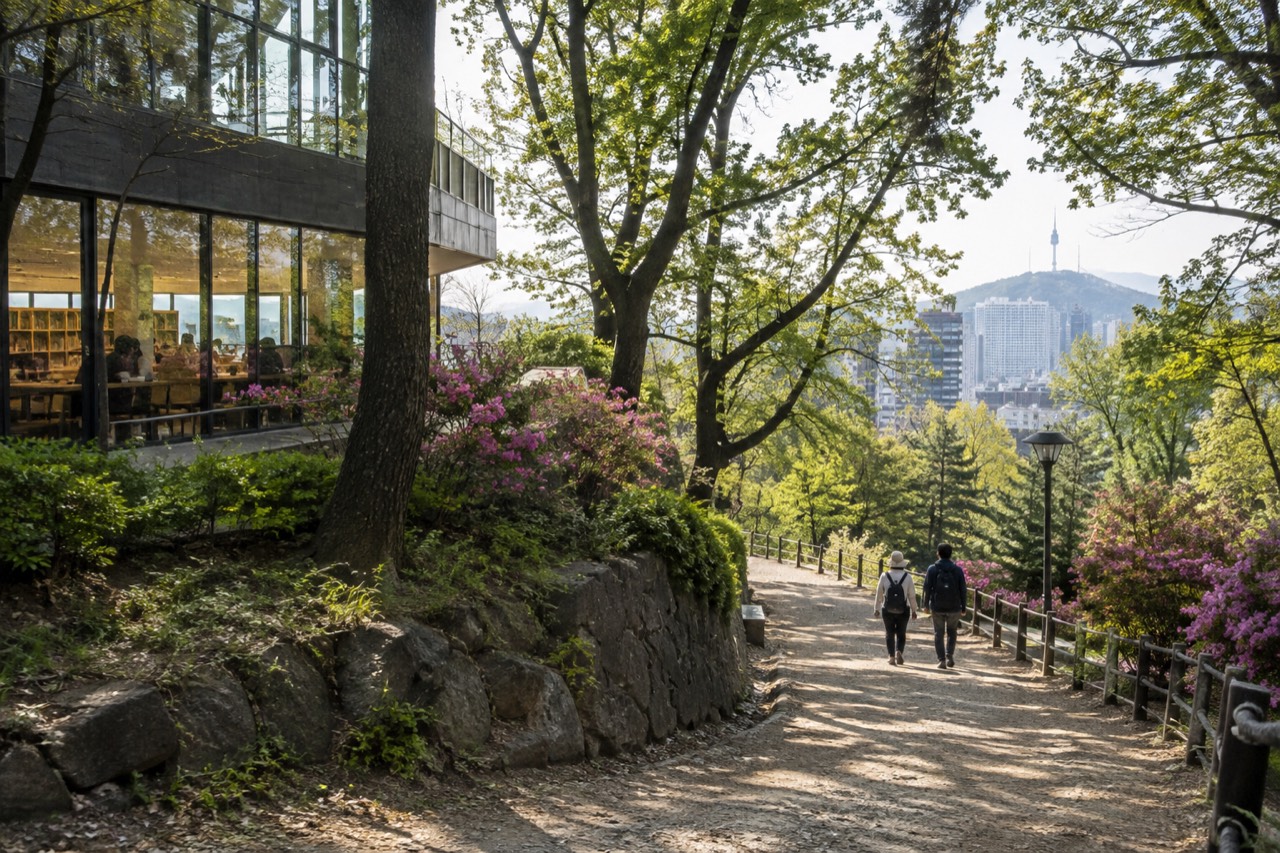
Yes, and for a reason most itineraries miss: the park, not the tower, is the free part. Namsan is the largest civic park in Seoul, divided into the Jangchung, Yejang, Hoehyeon and Hannam districts, and everything in it, the trails, the summit plaza, the love locks, the beacon mound and the city wall path, costs nothing. Only the observation deck inside the tower needs a ticket. A visitor who never buys one still gets the mountain.
That last sentence is the whole argument. A large share of the people riding up Namsan each day are moving through the park at speed, eyes on the tower, treating the forest, the stairs and the viewpoints as a corridor between the bus stop and the ticket desk. Seoul's own tourism site states it plainly: the entrance to Namsan Park is free. The mountain was a park before the tower was built on it, and it still behaves like one, with walkers, runners, families and couples occupying the summit terraces long after the last observatory visitor has gone down.
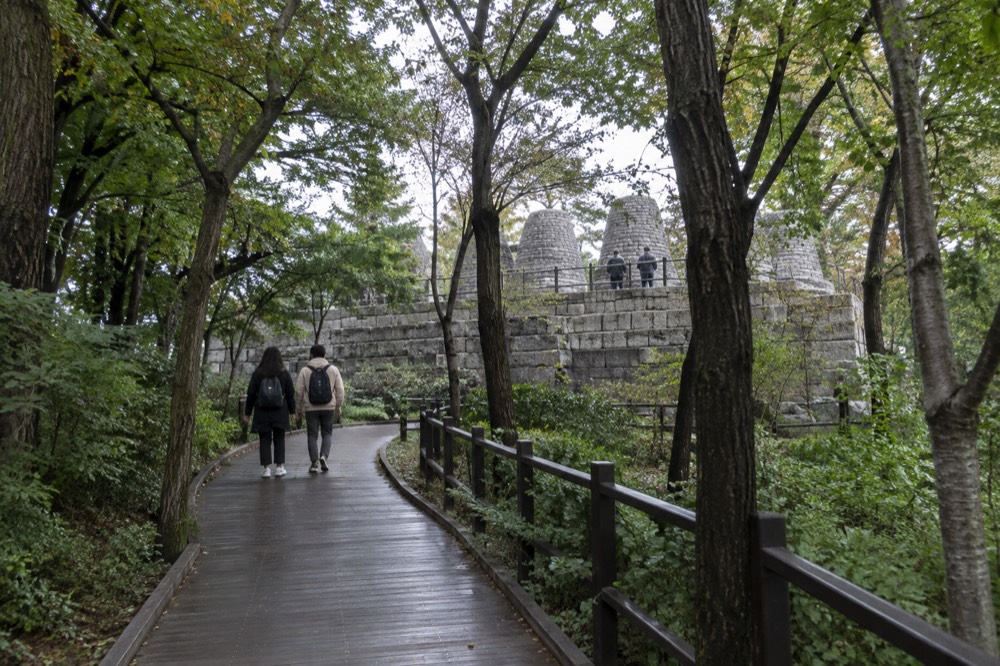
The park also carries real history. The Seoul City Wall trail that crosses Namsan is Historic Site No. 10, running from Sungnyemun to Jangchung Gymnasium. The Bongsudae beacon mound below the tower is a restored Joseon-era signal station, Seoul Monument No. 14. Baekbeom Square, with its statue of Kim Koo, dates from 1968. None of it sits behind a gate. If your idea of a good afternoon is a shaded climb, a pavilion, a view and a bit of Korean history, the park delivers all four for the price of a bus fare.
Whether you go all in on the park or pair it with the deck, the practical choices are the same, and the three options below cover the main ways visitors combine the mountain with the tower.
What is free at Namsan and what costs money?
Almost everything on the mountain is free. Namsan Park and its trails, the summit plaza and terraces, the Palgakjeong pavilion area, the love locks, the Bongsudae beacon mound, the Seoul City Wall path, the Seoul Tower Plaza shops and cafes, the Namsan Ormi inclined elevator and the Myeongdong shuttle bus all cost nothing. The paid list is short: the observation deck ticket, the cable car, the circular bus fare, parking, and food and shopping.
The boundary is cleaner than most visitors expect. The ticketed product is the observation deck inside the tower, entered at Plaza 5F, and nothing else. The operator's own FAQ confirms that The Place Dining on Tower 2F can be used without buying an observatory ticket, and directs visitors who bring their own food to the open plaza in front of Palgakjeong. YTN Seoul Tower's plaza directory lists a full retail floor, Starbucks, GS25, bhc Chicken, Gong Cha and more, open to anyone walking in off the summit.
| At Namsan | Free or paid | Notes |
|---|---|---|
| Park trails and the summit plaza | Free | Open ground, no gate, no ticket |
| Love locks and Palgakjeong area | Free | Part of what the city itself promotes |
| Bongsudae beacon mound and city wall path | Free | Historic sites on the mountain |
| Seoul Tower Plaza shops and cafes | Free to enter | You pay only for what you buy |
| Namsan Ormi inclined elevator | Free | Suspended Mondays 09:00 to 14:00 for maintenance |
| Myeongdong shuttle bus to the cable car | Free | Run by the cable car company |
| Observation deck inside the tower | Paid | The only ticketed attraction |
| Cable car, if you ride it | Paid | Separate company from the tower |
| Namsan circular buses 01A and 01B | Paid | KRW 1,500 per ride |
If the question is whether the park stands on its own, the free column answers it. A fuller breakdown of the same boundary, including how each route up the mountain fits into it, is in our guide to walking up Namsan Park, and the short version is in is it free to go up Namsan Tower.
The deck is the one thing worth paying for if you want it, and the box below is the quickest way to check it.
What can you actually do in the park?
Plenty: walk a historic trail, visit a Joseon signal station, follow the city wall, see the love locks, sit at Palgakjeong, and eat at the plaza. The city's own feature on Namsan groups the trail, the Locks of Love, the heart chairs, the photo booths and the Palgakjeong night view as things to do on the mountain, and prices only the observatory. There is also a free museum, the Ahn Jung-geun Memorial Museum, on Sowol-ro.
Start with the wall. The Seoul City Wall path across Namsan is a genuine walk through history, a designated Historic Site that follows the old fortress line over the mountain. The Bongsudae beacon mound sits just below the tower: a restored signal fire station from the Joseon era, once part of a network that relayed messages across the country by smoke and fire. It is one of the most photographed objects on the summit and it costs nothing to stand beside.
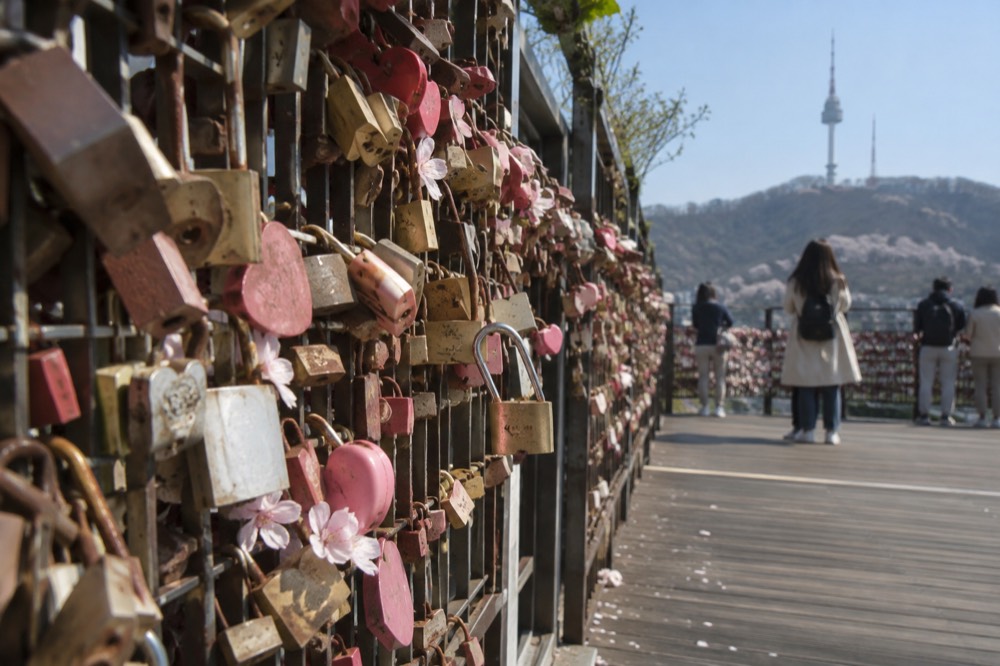
The love locks are the other fixture. They are confirmed present and active, part of what Seoul city itself promotes on Namsan, and the city's new guided night walk routes walkers past the love lock deck by name. Visitors report buying locks on site, including engraved ones. What no source settles is any removal programme: no operator, city or news announcement of a periodic clear-out exists, and no source says the locks are cleared on a cycle. Our N Seoul Tower love locks guide covers the ritual in detail.
Palgakjeong, the octagonal pavilion near the summit, anchors the free side of the mountain. The plaza in front of it is where the tower operator itself directs visitors who bring their own food, which tells you how the space is treated: open ground, picnic-friendly, no ticket. From Palgakjeong the ground falls away toward Namdaemun Market, and the city has deliberately linked its new night walk's finish to that descent so walkers can carry on eating there afterwards.
The Sky Forest Trail deserves a special mention because it changed who can visit. Named stops along it include the Sunset Observatory, a glass-fenced photo point, the Wind View Bridge over a metasequoia stand, a pine rest area, a wellness garden and Sowol Garden at the Namsan Library entrance, built around the Kim Sowol poetry monument. Before it opened, the steep old paths ruled out anyone who could not manage them. Now the summit is reachable on a gradient a wheelchair can handle.
How do you get up Namsan without a car?
You cannot drive up: general vehicle access has been restricted since 1 May 2005 for ecological protection. The ways up are the Namsan circular buses 01A and 01B from Chungmuro or Dongguk University stations, the free Namsan Ormi inclined elevator, the cable car, the free Myeongdong shuttle bus to the cable car base, or your own feet on one of the official walking trails.
The circular buses are the workhorses. Both 01A and 01B board at Chungmuro Station, on Lines 3 and 4, or Dongguk University Station on Line 3, and stop at N Seoul Tower. The fare is KRW 1,500, paid by transport card. They run from 06:30 to 23:00, 01A every 9 minutes and 01B every 14, and 01B also serves the cable car and the walking-trail entrance stop.
The Namsan Ormi is the quiet option. A glass-walled inclined elevator running between Namsan Tunnel 3 and the cable car station, free of charge, operating 09:00 to 23:00 and suspended every Monday morning from 09:00 to 14:00 for maintenance. Seoul's city government explains the Ormi's purpose and history on its own pages: it began operating on 30 June 2009 to improve pedestrian access. The city's sourced walking distances to it are 590 m, about 12 minutes, from Myeong-dong Station Exit 4 via Banpo-ro toward Namsan Tunnel 3, and 790 m, about 15 minutes, from Hoehyeon Station Exit 1 through the underground shopping centre to the Ormi.
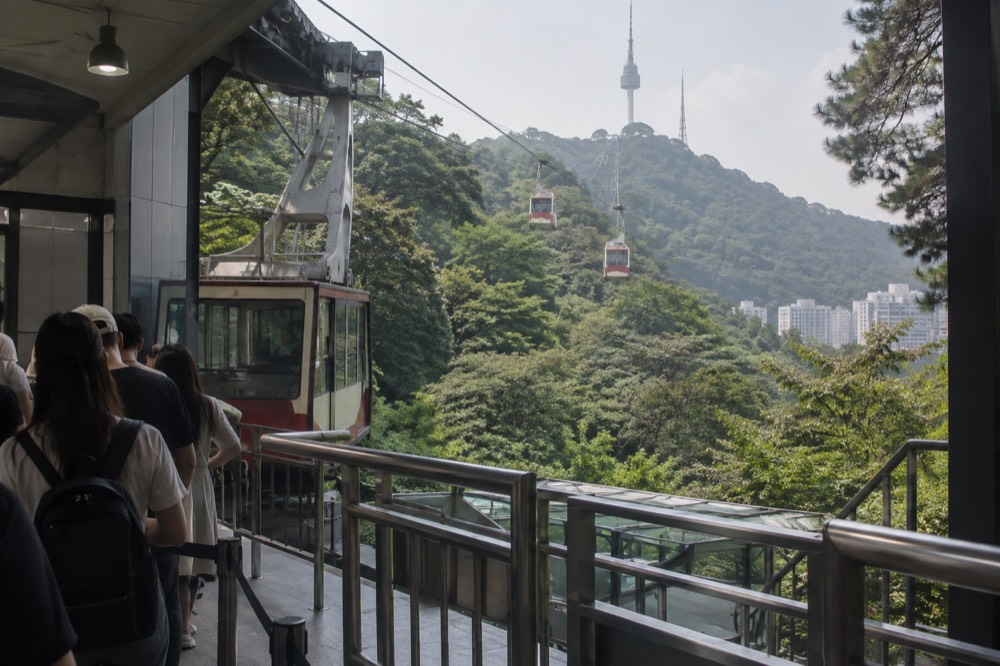
The cable car is the paid ride, a separate company from the tower, running 10:00 to 23:00 every day with adult fares of KRW 15,000 round trip and KRW 12,000 one way. Its lower station is up the hill from Myeongdong, not beside it, a detail that catches out a remarkable number of visitors. The tower operator's directions say to leave Myeongdong Station Exit 3 and walk along the street on the right-hand side of the Pacific Hotel, about 10 to 15 minutes. The company also runs a free shuttle between Myeongdong Station and the cable car platform, first departure 12:00 and last 20:30.
Walking is the way the park reveals itself. YTN Seoul Tower's own trail times: the Sam-soon Steps, known from the drama "My Lovely Sam-soon", take 40 minutes up to Palgakjeong; the Southern Circuit from the Namsan Public Library entrance takes 30 minutes; the route from the National Theater of Korea's ticket booth takes 40 minutes; and the steps beside the theatre take 30. Each is a real trail through forest, not a pavement with a view, and the unofficial shortcuts that used to cut across them have been closed and restored.
If you would rather ride up and spend your energy on the summit, the combined option below pairs the deck with the cable car. Note that it requires collecting a physical ticket at a partner shop in Myeongdong first, and collection closes at 18:00.
When is the best time to visit Namsan Park?
No official source publishes a best month for clear views, and the only fixed clock facts are the observatory's hours, 10:00 to 22:30 on weekdays and 10:00 to 23:00 on weekends and public holidays, with last admission 30 minutes before closing. What visitors report through 2026 is that weekends, holidays and evenings are the busy windows, and weekday visits and the early or late ends of the day are the quiet ones.
The crowding picture is qualitative, and it should stay that way: no source anywhere states a wait in clock terms. The cable car company's own advice is that mornings are quieter than afternoons and that boarding waits can get long at weekends. Visitor reports from July and August 2026 agree on the same pattern at both the tower and the cable car. If you can go on a weekday morning, do.
The view itself is a weather question. The operator states that on a clear day you can see up to 50 km from the observatory, naming Achasan and Ttukseom to the east, Bukhansan to the north, Gwanaksan to the south and Yanghwa Bridge, Nanjido and Ilsan to the west. Haze shrinks that dramatically, and no month is guaranteed. What is verified is seasonal in a different sense: the city describes Namsan as a famous cherry blossom spot and names the blossom path from Namsan Public Library up to N Seoul Tower, though no Namsan-specific bloom date exists, only Seoul-wide averages.
Evenings have a new pull. From September 2026 the city's free guided night walk crosses the summit at 18:00 and 20:00 daily, led by a licensed culture-and-tourism guide, and the whole night walking-tour season now runs mid-March through mid-November. The tower's lighting comes on after dark, and no operator or city source publishes a switch-on time, whatever third-party guides claim. The city's announcement of the night walk is the primary source for all of this.
One more reason the park has drawn fresh attention: Netflix's own locations guide for KPop Demon Hunters gives N Seoul Tower a section, staging the film's climax on the hill of Namsan, and Seoul's mayor publicly tied the mountain's recent visitor surge to the film. The mayor's remarks and the new trail programme were reported together in October 2025. The film's real-world trail now runs through the park as much as the tower.
Do you need a ticket for anything at Namsan?
You only need a ticket for the N Seoul Tower observation deck, which costs KRW 29,000 for adults (13+) and KRW 23,000 for children (3–12) and seniors (65+); toddlers under 36 months enter free. However, advance reservations at n.Grill include free observatory access, and HanCook diners receive a discount.
That is the entire paid surface of the mountain. The deck sits across observation levels of the tower, with digital telescopes offering optical zoom up to 36x on the roof terrace, Tower 4F and Tower 5F, and a Sky Post Office selling postcards and stamps, with the operator stating domestic delivery takes 2 to 3 days and overseas about 15. The tower's structure is 236.7 m, standing on Namsan at 270.0 m, giving the total elevation of 506.7 m above sea level that the operator publishes.
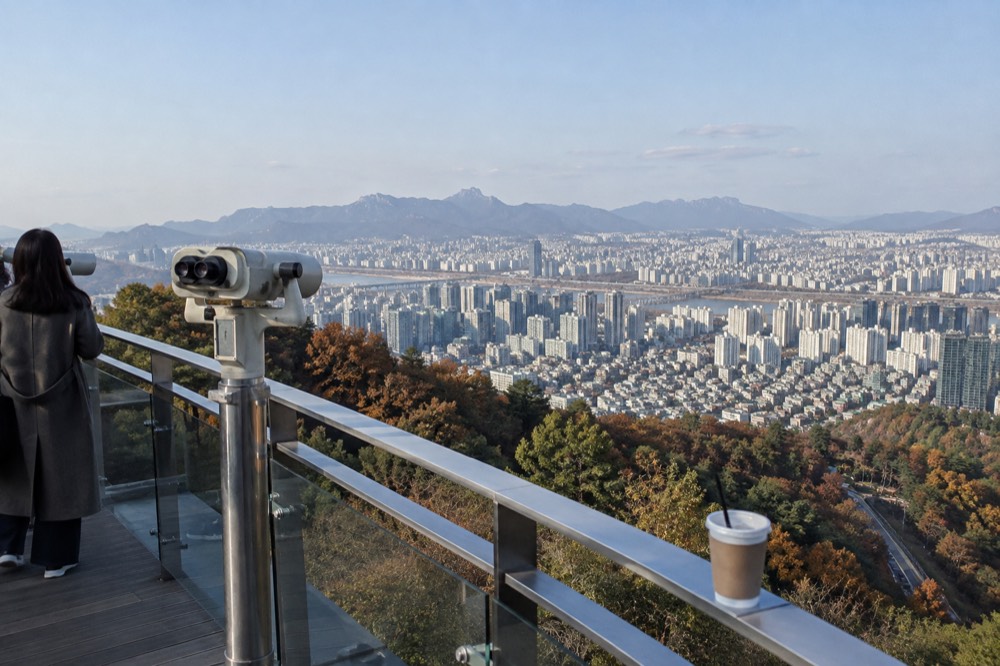
The deck is worth separating from the park in your planning because the two answer different questions. The park is the mountain: free, open, historical, best at an unhurried pace. The deck is a viewpoint inside a building: enclosed, ticketed, open 365 days a year. Many visitors do both, and many regulars in Seoul do only the park. A detailed comparison of the deck experience against the free terraces is in our N Seoul Tower observatory guide, and the wider question of whether the tower justifies its ticket is tackled in is the N Seoul Tower worth visiting.
On Namsan Tower Seoul, the split is simple: the mountain is free, the deck is the paid upgrade. The operator's own fee page is the source for every admission figure above, and a portal price still in circulation is stale, so treat the operator's numbers as the real ones.
If the deck is on your list, the standard ticket is the one most visitors need.
However you build the day, the same three options below are the ones worth comparing, whether you want the deck alone, the ride up included, or a faster route through the ticket counter.
Common questions about Namsan Park
Is Namsan Park Worth Visiting?
Yes. It is the largest civic park in Seoul, it is free, and it holds the Seoul City Wall trail, the Bongsudae beacon mound, the love locks, Palgakjeong and open summit terraces. Only the observation deck inside the tower needs a ticket, so a visitor who spends nothing still gets the mountain.
Is it free to enter Namsan Park?
Yes. Seoul's official tourism site states directly that the entrance to Namsan Park is free. The trails, the summit plaza, the love locks, the beacon mound, the city wall path, the plaza shops and cafes, the Namsan Ormi elevator and the Myeongdong shuttle bus are all free. The paid items are the observatory ticket, the cable car, the circular bus fare, parking, and anything you buy to eat or take home.
Can you drive up Namsan?
No. General vehicle access has been restricted since 1 May 2005 for ecological protection, with further restrictions on tour buses since August 2021. Only the shuttle buses, the Seoul City Tour Bus and vehicles carrying a disabled person's ID sticker may enter. Everyone else arrives by bus, cable car, inclined elevator or on foot.
How long does it take to walk up Namsan?
By the tower company's own trail times: the Sam-soon Steps take 40 minutes to Palgakjeong, the Southern Circuit from the Namsan Public Library entrance takes 30 minutes, the route from the National Theater of Korea's ticket booth takes 40 minutes, and the steps beside the theatre take 30. The new barrier-free Sky Forest Trail offers a gentler, decked gradient for anyone who finds the old paths too steep.
Are the love locks still at Namsan?
Yes. The locks are confirmed present and active, and Seoul's own new guided night walk, launched in September 2026, routes walkers past the love lock deck by name. Visitors report buying locks on site, including engraved ones. No removal programme has been announced by any operator, city or news source.
Do you need a ticket for the view from Namsan?
No. The views from the summit plaza, the terraces around the tower base and Palgakjeong are free and need no ticket. The paid observation deck is inside the tower, at KRW 29,000 for adults and KRW 23,000 for children and seniors, with last admission 30 minutes before closing.